
Domingo, 7 de junho de 2026 | Porto Velho (RO)
Domingo, 7 de junho de 2026 | Porto Velho (RO)

Domingo, 18 de janeiro de 2026 - 08h05
English
version below
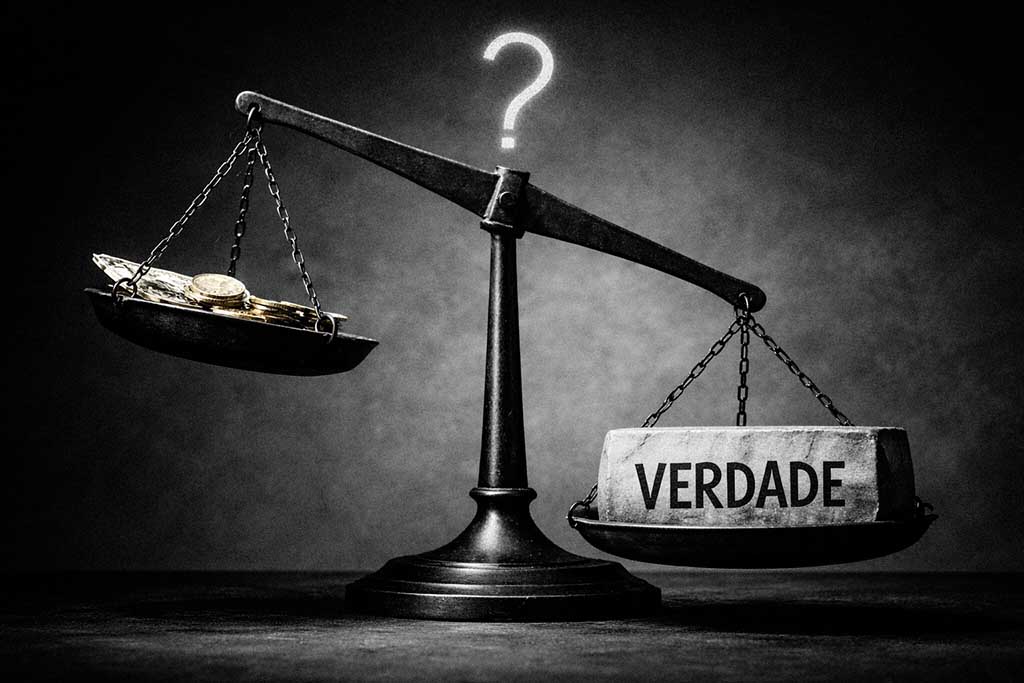
Há uma ruptura silenciosa que poucas sociedades percebem enquanto ainda há tempo. Ela não ocorre quando um tribunal erra por falha humana. O colapso real começa quando o sistema, gradualmente, passa a premiar não a verdade, mas a narrativa melhor financiada; não a prova mais consistente, mas a parte mais capaz de suportar os custos da disputa; não a razão pública, mas o peso econômico de quem pode transformar litígio em instrumento de pressão.
Quando a justiça se curva ao dinheiro, não é apenas um
indivíduo que perde: é o próprio contrato moral da democracia que se rompe. O Judiciário deixa de ser o árbitro do real e se converte em arena de assimetrias,
onde a igualdade se torna retórica e a cidadania passa a depender do orçamento.
1) A justiça monetarizada e o dano invisível à
democracia
Uma democracia real não
é apenas o
direito de votar. Ela depende de instituições que protejam o cidadão contra o
abuso — inclusive o abuso travestido de legalidade.
Quando o acesso ao sistema
judicial é desigual, a verdade não desaparece por falta de existência: ela desaparece por falta de condições de defesa.
Em um sistema
monetarizado, o litígio se torna um mecanismo de desgaste: quem tem recursos
prolonga, pressiona, ameaça, multiplica custos, explora burocracias. A parte vulnerável, por exaustão, tende a ceder. Assim, o Direito se
transforma em indústria
e o processo, em método de extorsão moral e financeira.
Nesse contexto, a justiça
não falha “de vez em quando”: ela passa a funcionar como estrutura previsível de benefício para quem pode pagar. E o que nasce dessa distorção
é mais
grave do que um erro pontual: nasce uma cultura institucional de
permissividade, onde a desigualdade deixa de ser exceção e vira regra.
2) O dilema ético: o advogado que
sabe que o cliente está errado e ainda assim fomenta a mentira
Aqui é essencial separar três coisas:
(A) Defender alguém que cometeu o ato não
é mentir
Um advogado pode — e deve — garantir
os direitos processuais de qualquer pessoa, inclusive quando as evidências sugerem culpa. Isso inclui exigir prova
consistente, impedir abusos, questionar ilegalidades e preservar o devido
processo.
Isso não
é cinismo: é civilização.
(B) Defender teses jurídicas não é fabricar
fatos
É plenamente legítimo discutir intenção, proporcionalidade, dúvida
razoável, nulidades, credibilidade de
testemunhas, admissibilidade de provas e interpretação do Direito.
Outra coisa é inventar versões factualmente falsas, orientar testemunhas a mentir,
manipular prova, ocultar deliberadamente evidência material ou apresentar narrativa sabidamente
enganosa.
Isso já
não é advocacia
combativa: é fraude travestida de técnica.
(C) A fronteira ética: “sei
que é falso, mas vou sustentar”
Aqui está
o ponto filosófico decisivo: o advogado não é “dono”
da verdade, mas também não pode se tornar cúmplice consciente do falso.
O núcleo ético da prática jurídica não
deveria ser “vencer a qualquer custo”, e sim preservar a integridade mínima do jogo democrático: um espaço em que fatos importam, provas têm peso e a razão pública ainda possui valor.
Quando um profissional,
por acesso privilegiado e compreensão técnica, reconhece a
falsidade e ainda assim a sustenta como método, ele passa a operar como um operador de distorções,
alguém que converte o Direito em mecanismo de impunidade ou de
pressão —
e não em instrumento de
justiça.
Há uma
formulação dura, porém necessária:
quando a mentira vira
estratégia profissional, o Direito deixa de ser ordem e passa a
ser teatro.
Nesse ponto, cabe ainda um
registro objetivo: profissionais do Direito que atuam com prudência e responsabilidade institucional compreendem que
nenhum benefício
circunstancial compensa os custos éticos, profissionais e reputacionais associados à
transgressão. A
possibilidade de apurações disciplinares, sanções proporcionais e, em casos
mais graves, restrições ao exercício profissional não é retórica — é consequência previsível quando se ultrapassam limites claros. E quando esses
limites são relativizados por conveniência ou cálculo, o dano excede o interesse imediato das partes: a
maior vítima
passa a ser a própria
sociedade, que perde confiança no sistema e nos seus mecanismos de proteção.
3) Fundamentos clássicos: por que isso destrói o sentido da Justiça
Essa crítica não nasce
de sentimentalismo. Ela tem fundamentos sólidos na tradição filosófica:
Aristóteles
compreendia justiça
como virtude social: a disposição de dar a cada um o que lhe é devido.
Se o dinheiro compra o resultado, o sistema já não distribui justiça — distribui
vantagem.
A noção de equidade nasce
para corrigir a rigidez desumana do formalismo. Mas sem compromisso com a
verdade, a equidade degenera em “flexibilidade seletiva”: uma elasticidade aplicada aos fortes e negada aos
fracos.
Em Kant, mentir não
é um
detalhe pragmático:
é uma
agressão à estrutura
da razão pública. Se
a mentira se normaliza como ferramenta, a instituição do julgamento racional
perde seu fundamento.
Em Rawls, justiça
é fairness:
jogo limpo. Quando o sistema favorece sistematicamente quem tem mais recursos,
ele deixa de ser neutro e vira gerador institucional de desigualdade.
Em Habermas, a
legitimidade de decisões públicas depende da aceitabilidade racional: argumentos,
provas, justificativas. Se uma decisão nasce da vantagem econômica e não da razão, ela deixa de ser justiça reconhecida e vira imposição tolerada.
4) A consequência humana: quando a verdade vira luxo
O resultado concreto não
é apenas teórico. O efeito é humano: cidadãos desamparados, honrados, pacíficos, passam a sentir que justiça
é um privilégio e não um direito.
Quando isso se instala, o
Estado perde autoridade moral. E o que surge no lugar não
é ordem: é desconfiança, ressentimento e descrença coletiva.
Se o sistema premia o
oportunismo e penaliza a honestidade, o que se ensina à
sociedade não é cidadania:
é cinismo.
E o cinismo é a antessala da decadência.
Conclusão
Quando a justiça se curva ao dinheiro, não é apenas a
verdade que se enfraquece: é a democracia que se deteriora. O sistema deixa de ser um árbitro e passa a funcionar como um mercado de narrativas,
onde vence quem pode financiar a versão mais eficiente.
Nesse cenário, a lei já não garante igualdade — ela
apenas administra desigualdades.
Uma justiça comprável é apenas um nome elegante para injustiça organizada.
English
WHEN JUSTICE BOWS TO MONEY AND DISREGARDS TRUTH
The moral hazard of a monetized judiciary and the ethical dilemma of
legal advocacy that normalizes lies. Money cannot outweigh truth in the work of
a practitioner of the law—nor in the conscience of a fair judge, who has a duty
to separate truth from the monetarist interests of those who seek to buy a
verdict.
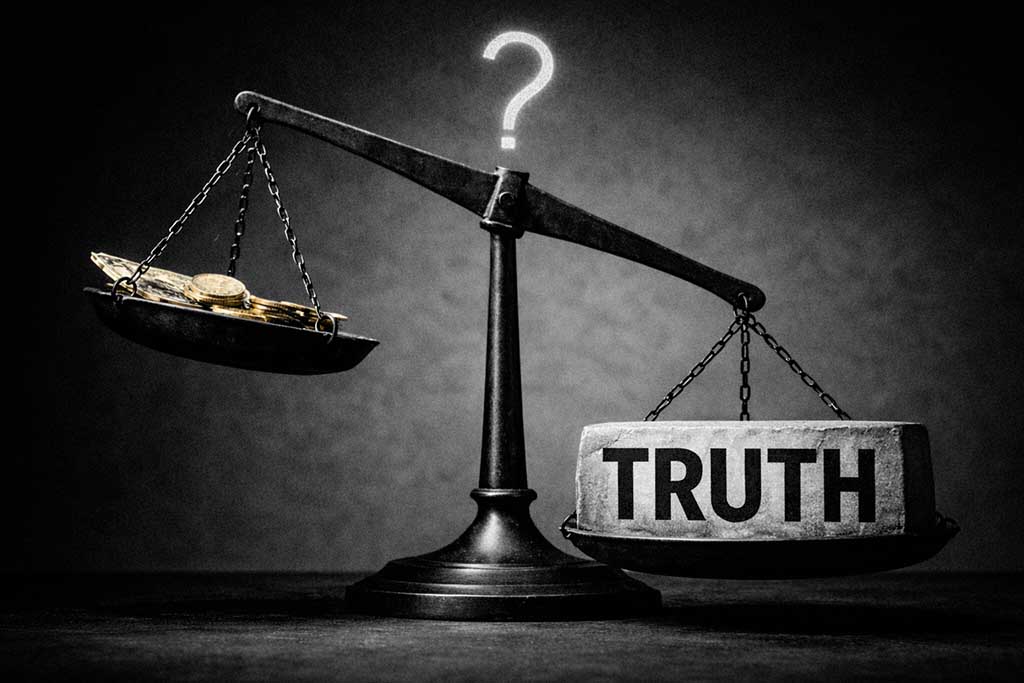
When justice bows to
money, it is not merely an individual who loses. The moral contract of
democracy itself is fractured. The judiciary ceases to function as an arbiter
of reality and becomes an arena of asymmetries, where equality turns into
rhetoric and citizenship becomes dependent on budget.
1) A monetized justice
system and the invisible harm to democracy
A real democracy is not
merely the right to vote. It depends on institutions capable of protecting
citizens from abuse—including abuse disguised as legality.
When access to the
courts is unequal, truth does not vanish because it does not exist; it vanishes
because it cannot be defended.
In a monetized system,
litigation becomes a mechanism of attrition: those with resources prolong
proceedings, increase pressure, multiply costs, exploit bureaucratic delays,
and weaponize procedure. The vulnerable party, exhausted, is often pushed
toward surrender. Thus, the law turns into an industry, and the courtroom
becomes a stage where financial stamina substitutes for justice.
In such a climate,
justice does not fail “occasionally.” It begins to operate as a predictable structure that
benefits those who can afford the struggle. And what emerges from that
distortion is more dangerous than an isolated error: a culture of institutional
permissiveness, where inequality is no longer the exception—it becomes the
rule.
2) The ethical dilemma:
the lawyer who knows the client is wrong and still fuels the lie
Here, it is essential
to distinguish three things:
(A) Defending someone
who committed the act is not the same as lying
A lawyer can—and must—protect
procedural rights even when the evidence suggests wrongdoing. That includes
demanding proper proof, preventing abuse, challenging unlawful practices, and
safeguarding due process.
This is not cynicism.
It is civilization.
(B) Arguing legal
theories is not the same as manufacturing facts
It is legitimate to
debate intent, proportionality, reasonable doubt, procedural defects,
credibility, admissibility of evidence, jurisdiction, and the interpretation of
law.
But it is something
else entirely to invent a false factual account, coach a witness to lie,
manipulate evidence, deliberately conceal material facts, or build a narrative
one knows to be deceptive.
That is no longer
zealous advocacy—it is fraud wearing a technical mask.
(C) The ethical
boundary: “I know it is false, but I will argue it anyway”
This is the decisive
philosophical point: a lawyer is not the “owner”
of truth, but cannot become a
conscious accomplice of falsehood either.
The ethical core of
legal practice should not be “winning at any cost,” but preserving the minimum integrity of the democratic
game: a space where facts matter, evidence carries weight, and public reason
still has authority.
When a professional,
through privileged access and technical understanding, recognizes falsity and
still advances it as a method, the lawyer becomes an operator of distortion—turning
law into a mechanism of impunity or coercion rather than an instrument of
justice.
There is a harsh but
necessary formulation:
when deception becomes
professional strategy, law ceases to be order and becomes theater.
At this point, one additional
clarification becomes necessary. Legal professionals who act with discernment
and institutional responsibility understand that no short-term advantage
justifies the objective risks of ethical transgression. Disciplinary scrutiny,
reputational erosion, sanctions, and—in more serious circumstances—restrictions
on professional practice are not hypothetical costs; they are predictable
consequences of conduct that crosses clear boundaries. And when those
boundaries are deliberately disregarded, the harm extends far beyond the
immediate parties: the ultimate victim is society itself, whose trust in the
legal system is gradually depleted.
3) Classical
foundations: why this corrodes the meaning of justice
This critique is not
emotional. It stands on solid philosophical ground.
For Aristotle, justice
is a social virtue: a stable disposition to give each person what is due. If
money can buy outcomes, the system is no longer distributing justice—it is
distributing advantage.
The idea of equity
exists to correct the inhuman rigidity of strict formalism. Yet without
commitment to truth, equity degenerates into selective flexibility—elastic for
the strong, rigid for the weak.
In Kant, lying is not a
tactical detail. It is an assault on the structure of public reason itself.
Once deception is normalized as a tool, the very foundations of rational
judgment collapse.
In Rawls, justice is
fairness: a level playing field. When the system structurally favors those with
greater resources, the state loses impartiality and becomes an institutional
producer of inequality.
In Habermas, legitimacy
depends on rational acceptability: reasons, evidence, justification. If
outcomes flow from economic advantage rather than reason, decisions are no
longer experienced as justice—they are tolerated as imposition.
4) The human
consequence: when truth becomes a luxury
The concrete result is
not theoretical—it is human. Honest, peaceful citizens begin to feel that
justice is a privilege rather than a right.
Once this takes root,
the state loses moral authority. And what replaces it is not order, but
distrust, resentment, and collective disillusionment.
If opportunism is
rewarded and integrity is punished, society is not taught citizenship—it is
taught cynicism. And cynicism is the threshold of decline.
Conclusion
When justice bows to
money, it is not only truth that weakens—democracy itself decays. The system
stops being an arbiter and becomes a marketplace of narratives, where victory
goes to the side most capable of funding the most efficient story.
In that environment,
the law no longer guarantees equality—it merely manages inequality.
A justice system that
can be bought is simply a refined name for organized injustice.
 Domingo, 7 de junho de 2026 | Porto Velho (RO)
Do ‘Cango-tráfico’ ao ‘Cango-terrorismo’: a nova face da política externa de Lula
Há momentos em que a política produz cenas tão curiosas que a realidade parece pedir ajuda ao humor para ser compreendida. A recente notícia envolve

A Frágil Narrativa de Leão XIV: A Inteligência Artificial e o Fim do Lucrativo Monopólio do Mistério
| Português | English | Español Quando a razão tecnológica confronta dogmas milenares, o verdadeiro medo não está na máquina que aprende, mas nas i

A Melancolia da Razão em uma Civilização em Declínio
🇧🇷 Versão Original em Português🇺🇸 English Version Below 🇪🇸 Versión en Español AbajoTalvez o aspecto mais inquietante da experiência humana se

Delírio, imaginação fértil e bloqueio mental: a tentativa doentia de sustentar o irrazoável
🇧🇷 Versão Original em Português 🇺🇸 Versão em inglês abaixo 🇪🇸 Versão em espanhol do Abajo Impactado pela imagem artificial de uma criatura “
Domingo, 7 de junho de 2026 | Porto Velho (RO)