
Sábado, 6 de junho de 2026 | Porto Velho (RO)
Sábado, 6 de junho de 2026 | Porto Velho (RO)

Sexta-feira, 20 de fevereiro de 2026 - 09h05
Repentinamente desperto, refletindo sobre a efemeridade
da existência humana, sinto a
necessidade de escrever — como quem tenta não desperdiçar as centelhas de lucidez que surgem no silêncio da madrugada.
Talvez a insônia — essa hóspede
indesejada que insiste em visitar quando o corpo pede repouso — seja,
paradoxalmente, um dos poucos momentos em que a consciência encontra silêncio suficiente para se escutar sem a mediação das urgências do dia.
Enquanto o tempo passa, extasiados ou distraídos, contemplamos o universo cuja beleza só conseguimos perceber a uma distância ínfima dos nossos próprios
olhos. Alguns buscam compreender o sentido real da existência; outros se ocupam com ilações que tentam converter
em realidade; enquanto multidões se consolam com a improvável ideia de caminhos que os conduzirão à eternidade — ao reencontro com aqueles com quem tiveram o privilégio de conviver aqui,
mas nem sempre souberam tratar com apreço.
Todos, sem exceção, receberam o raro privilégio de haver chegado
a esta dimensão para vivenciar uma experiência verdadeiramente celestial — não no sentido místico do “divinal”, mas no sentido cósmico: o
de habitar este corpo celeste que chamamos de universo.
A mente teme porque deseja permanência. A realidade segue porque opera por transformação.
Entre esses dois movimentos nasce a ansiedade: o desejo
de estabilidade confrontado com a vocação
inevitável da mudança — o diálogo honesto entre o atrito da permanência desejada e a transformação inevitável,
imperceptível para intelectos
envolvidos pela sombra do medo, sofrendo por antecipação na escassez de luz
interior.
Reconhecer — com medo ou apesar dele, apegados ou não à continuidade desta experiência — que todo ciclo biológico se encerra, pode inaugurar uma forma discreta de paz interior. Admitir com serenidade que, ao final desta travessia, nada do que hoje percebemos como material persistirá na forma que conhecemos — e que seremos, no máximo, energia dissipada no tecido do cosmos — não empobrece a existência; ao contrário, dissolve expectativas insustentáveis e nos emancipa da cultura do medo que aprisiona mentes despreparadas para a finitude. Encarar o término não como falência, mas como condição intrínseca ao próprio fenômeno de existir, permite recebê-lo com resignação lúcida e até gratidão, atenuando o sofrimento amplificado pelo pavor da morte e pelas promessas de permanência que jamais poderiam se cumprir.
E o tempo — esse senhor que dobra os poderosos, nivela ricos e
desprovidos, materialistas e espiritualistas — transforma
a arrogância e a beleza em
trapos desprezíveis no limiar da
exaustão da vida. A luz, outrora intensa, reduz-se a um tom tênue antes de apagar-se, e tudo entra num túnel de silêncio indescritível, pondo fim às ilusões: ao
desejo antigo de eternidade, de reencontro e de continuidade da vida na forma
material.
Ainda assim, persistem os delírios de ruas de ouro, rios de leite e mel, mansões
celestiais e trombetas triunfantes —
como se espíritos pudessem usufruir dos mesmos privilégios
que só fazem sentido nesta
dimensão física.
Nada permanece —
e nisso reside não uma ameaça, mas uma forma silenciosa de misericórdia
ontológica.
O tempo segue implacável. Cada segundo que passa não retorna. E entre dias de
chuva e tempestade, ventos, frio e calor — ou sob o
sol embalado pela trilha sonora de pássaros inocentes e o riso de crianças — repete-se
o ciclo da vida neste lugar espetacular onde desperdiçamos oportunidades que surgem como pepitas ou pedras
preciosas: o tesouro inestimável
da interação humana.
Compreender os ciclos não é resignar-se
ao destino, mas libertar-se da necessidade de congelar o que, por natureza, é fluxo.
Distraídos,
seguimos nossa sina até o momento final —
cambaleantes como ébrios numa estreita
ruela entre a razão e a loucura, entre a obediência e a transgressão de normas imaginativas, muitas
vezes desprovidas de sentido ético, moral ou espiritual, formatando conceitos ou
interpretando a realidade a partir de um limitado e sectário ângulo
de conhecimento.
Talvez, se nos dispuséssemos a compreender
o sentido maior da existência
— livre da contaminação de narrativas antigas, de delírios coletivos e promessas improváveis — perceberíamos
que grande parte do temor que nos envolve diante da partida não nasce da morte
em si, mas da cultura do apego ao que jamais nos foi dado para eternizar.
Assim, refletir sobre a efemeridade da existência humana é também uma forma de não desperdiçar essas preciosas centelhas de lucidez que, como
vagalumes, iluminam a mente — convidando-nos a valorizar aquilo que temos hoje, e que é, de fato, real.
Entre o desejo de permanência e a inevitabilidade da transformação, a lucidez
consiste em não sofrer pela eternidade imaginada que nos escapa no presente — único instante onde, de fato, toda existência acontece.
___________
Comentários:
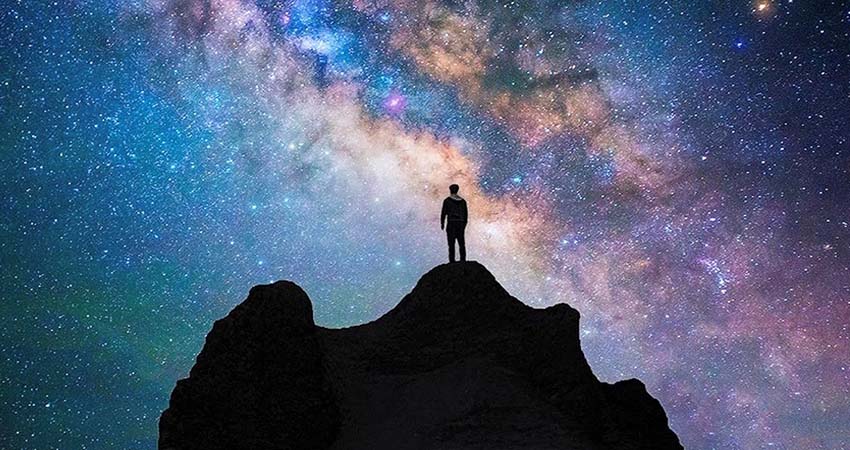
A imagem que acompanha este ensaio não pretende sugerir transcendência por vias místicas, mas convidar à contemplação da condição humana diante da vastidão do cosmos. Em sua discrição, ela sintetiza efemeridade, consciência e escala cósmica sem recorrer a simbologias religiosas — exatamente como o texto propõe ao situar a experiência humana como um breve lampejo de lucidez na imensidão silenciosa do universo material. A. Monaigne – Vancouver, CA
—————-
ENGLISH
Ephemerality:
Between the Tangible and the Imagined
Suddenly
awakened, reflecting on the ephemerality of human existence, I feel compelled
to write — as one who refuses to waste the sparks of lucidity that emerge in
the silence of the early morning hours.
Perhaps
insomnia — that unwelcome guest that lingers when the body longs for rest — is,
paradoxically, one of the few moments when consciousness finds enough quiet to
hear itself, free from the practical urgencies of the day.
As
time passes, whether in awe or distraction, we contemplate a universe whose beauty
we can perceive only within the narrow limits of our own sight. Some seek to
understand the true meaning of existence; others occupy themselves with
conjectures they attempt to turn into reality; while multitudes find comfort in
the unlikely belief that there are paths leading them to eternity — to reunions
with those they once had the privilege of sharing life with, but not always the
wisdom to cherish as they deserved.
All
of us, without exception, have been granted the rare privilege of arriving in this
dimension to experience something truly celestial — not in a mystical or divine
sense, but in a cosmic one: the experience of inhabiting this celestial body we
call the universe.
The
mind fears because it longs for permanence.
Reality moves forward because it operates through
transformation.
Between
these two forces, anxiety is born: the desire for stability confronting the
inevitable nature of change — the honest dialogue between the friction of
desired permanence and unavoidable transformation, often imperceptible to minds
overshadowed by fear, suffering in anticipation within the scarcity of inner
light.
To
acknowledge — with fear or in spite of it, whether we’re attached to this life or not — that every biological cycle comes to
an end can open the door to a quiet kind of inner peace. To calmly accept that,
at the end of this passage, nothing we now experience as material will persist
in any recognizable form — and that we will become, at most, energy dispersed
into the fabric of the cosmos — does not diminish the meaning of existence; on
the contrary, it helps dissolve unsustainable expectations and frees us, in
some measure, from the culture of fear that traps minds unprepared to face
finitude. To approach this ending not as a failure, but as a condition
intrinsic to the very act of existing, allows us to receive it with lucid
resignation and even gratitude, easing the suffering intensified by the fear of
death and by promises of permanence that were never ours to keep.
Time —
that silent force that humbles the powerful and levels both the wealthy and the
deprived, the materialist and the spiritualist alike — turns arrogance and
beauty into fragile remnants at the threshold of life’s exhaustion. Light, once vibrant, fades into a dim glow before vanishing,
and everything enters a tunnel of indescribable silence, bringing an end to
illusions: the ancient longing for eternity, for reunion, and for the
continuation of life in material form.
And
yet, visions persist — of streets of gold, rivers of milk and honey, celestial
mansions, and triumphant trumpets — as though spirits could enjoy privileges
that make sense only within this physical dimension.
Nothing
remains — and in that lies not a threat, but a quiet form of ontological mercy.
Time
moves relentlessly forward. Every passing second is gone forever. Between days
of rain and storm, wind and cold, or beneath the sun accompanied by the melodic
soundtrack of innocent birds and the laughter of children, the cycle of life
repeats itself in this remarkable place where we squander opportunities that
appear like nuggets of gold or precious stones: the immeasurable treasure of
human interaction.
To
understand cycles is not to surrender to fate, but to free ourselves from the
urge to freeze what is, by nature, in motion.
Distracted,
we move along our path until the final moment — staggering like the intoxicated
along a narrow alley between reason and madness, between obedience and the
transgression of imagined norms, often devoid of ethical, moral, or spiritual
meaning, shaping concepts or interpreting reality from a limited and sectarian
angle of knowledge.
Perhaps,
if we were willing to grasp the deeper meaning of existence — free from the
contamination of ancient narratives, collective delusions, and improbable
promises — we would realize that much of the fear surrounding our departure
does not arise from death itself, but from a cultural attachment to what was
never ours to eternalize.
Thus,
reflecting on the ephemerality of human existence becomes a way not to waste
those precious sparks of lucidity which, like fireflies, illuminate the mind — inviting
us to value what we truly have today, and what is, in fact, real.
Between
the desire for permanence and the inevitability of transformation, lucidity
lies in not suffering for the imagined eternity that escapes us in the present —
the only moment in which existence truly takes place.
_____________
Comments
The
image accompanying this essay does not aim to suggest transcendence through
mystical symbolism, but rather to invite contemplation of the human condition
in the face of the vastness of the cosmos. In its restraint, it synthesizes
ephemerality, consciousness, and cosmic scale without resorting to religious
imagery — precisely as the text proposes in framing human experience as a brief
flash of lucidity within the silent immensity of the material universe. A. Montaigne. Montreal, CA
 Sábado, 6 de junho de 2026 | Porto Velho (RO)
Do ‘Cango-tráfico’ ao ‘Cango-terrorismo’: a nova face da política externa de Lula
Há momentos em que a política produz cenas tão curiosas que a realidade parece pedir ajuda ao humor para ser compreendida. A recente notícia envolve

A Frágil Narrativa de Leão XIV: A Inteligência Artificial e o Fim do Lucrativo Monopólio do Mistério
| Português | English | Español Quando a razão tecnológica confronta dogmas milenares, o verdadeiro medo não está na máquina que aprende, mas nas i

A Melancolia da Razão em uma Civilização em Declínio
🇧🇷 Versão Original em Português🇺🇸 English Version Below 🇪🇸 Versión en Español AbajoTalvez o aspecto mais inquietante da experiência humana se

Delírio, imaginação fértil e bloqueio mental: a tentativa doentia de sustentar o irrazoável
🇧🇷 Versão Original em Português 🇺🇸 Versão em inglês abaixo 🇪🇸 Versão em espanhol do Abajo Impactado pela imagem artificial de uma criatura “
Sábado, 6 de junho de 2026 | Porto Velho (RO)